

The Reading Miner – The Story of Sydney Chowd Quick, Reading’s forgotten hero…….
A stage play / musical with songs
Synopsis
In the present day, visitors wander through Old Reading Cemetery on an open day. A guide pauses briefly at an overgrown grave, offering only scraps of information: Sydney Quick. Died 1946. Possibly heroic. The group moves on. But the question lingers—who was he, and why is he forgotten?
The story rewinds to 1930s Reading, a working-class town where life continues in pubs, clubs, and music halls despite looming war. At the heart of this world is Sydney Chown Quick, a young man living with his family above the Salisbury Club on London Road, where his parents work as stewards.
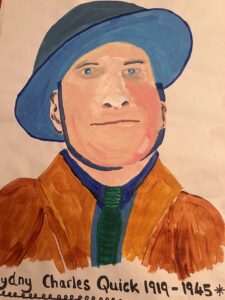
Sydney is cheerful, musical, and grounded in community. He works for the RAF at Woodley Aerodrome, contributing quietly to the war effort while Britain slips from recession into global conflict.
As war intensifies, Reading is scarred by loss. The 1943 daylight bombing of Market Square kills dozens, devastates families, and symbolically shatters the Queen Victoria statue—her finger blown away. The town reels, and the sense of vulnerability deepens. Songs and pub conversations reflect grief, defiance, gallows humour, and the resilience of ordinary people.
By 1943, Britain faces a new crisis: coal. With miners depleted and energy supplies failing, the government turns to desperate measures. Voluntary schemes are followed by compulsory conscription into the pits—the Bevin Boys. Though widely branded as cowards for not going to the front, these men are sent underground to keep the nation alive.
Sydney volunteers. Believing his country needs coal as much as soldiers, he leaves Reading Station in 1944, saying goodbye to his parents and the life he knows. He is sent to the Caerphilly coalfield in South Wales, where he confronts brutal conditions, suspicion from seasoned Welsh miners, and the physical and psychological shock of pit life. Slowly, through labour, humour, and shared danger, bonds are formed.
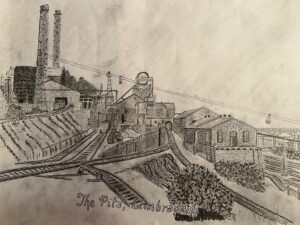
Working as an assistant to Jones, a mine repairer, Sydney proves conscientious and brave. When the war ends in 1945, celebrations ring out above ground—but not for the conscripted miners, who are forced to stay on, unrecognised and unrewarded.
During a routine inspection, a roof fall traps Jones. Ordered to stay clear, Sydney turns back. He frees his colleague—but the roof collapses completely. Sydney is fatally injured, giving his life to save another man.
In 1946, Sydney’s body is returned to Reading and buried quietly. Though awarded the King’s Medal for Bravery, his death passes into obscurity. Like thousands of Bevin Boys, his service is dismissed, his sacrifice misunderstood. His parents receive a clock. History moves on.
The play returns to the present. The cemetery stands silent. The forgotten grave is still there. But now the audience knows the truth.
The Reading Miner is a story of hidden heroism—of a man who did his duty not with a gun, but with a shovel and his bare hands. It challenges who we choose to remember, and asks: how many heroes lie unrecognised beneath our feet?